


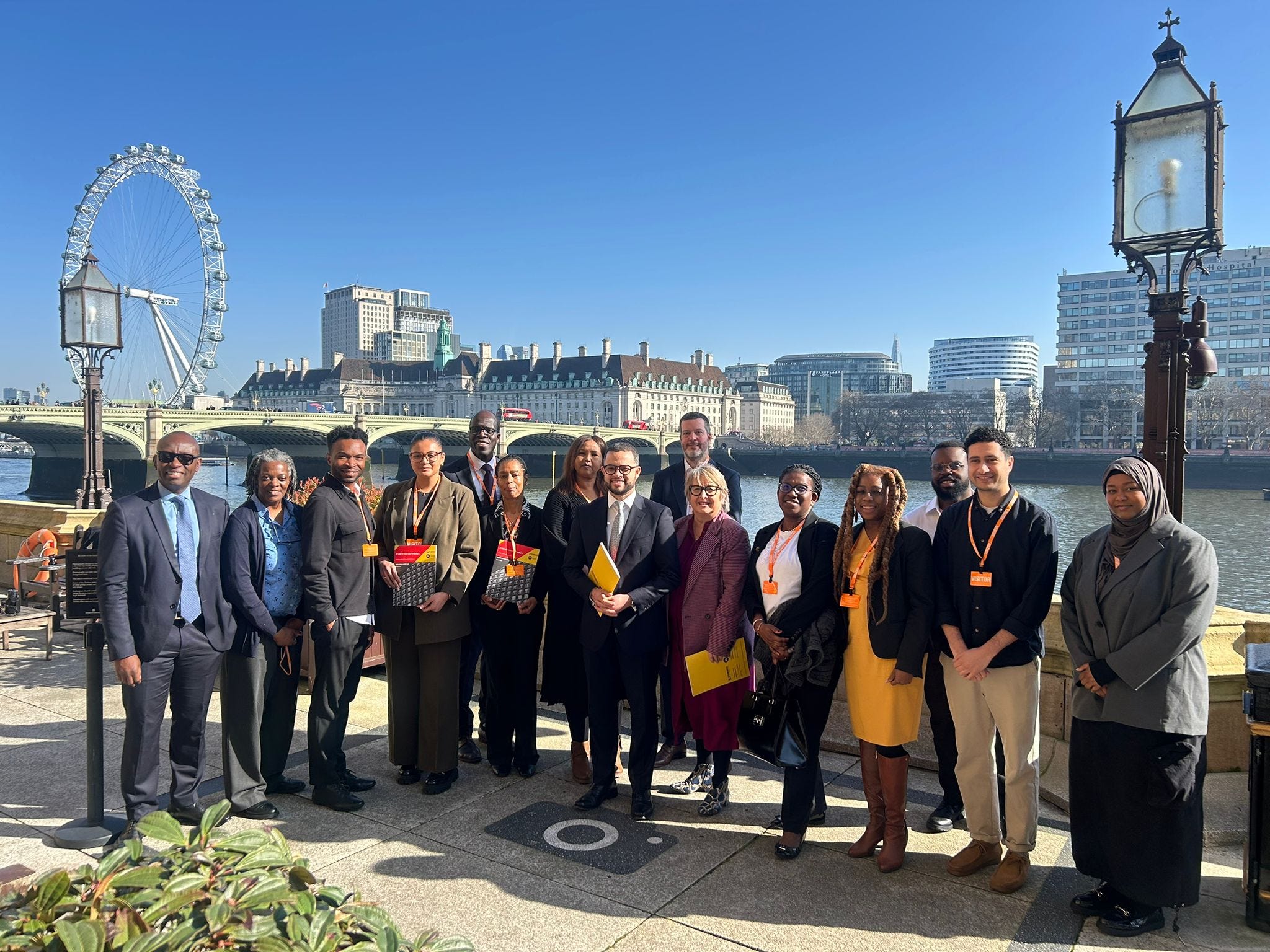
On Thursday, the Fairness Foundation and the Black Equity Organisation launched our new joint report in Parliament, revealing the reality of racial wealth inequalities in the UK today.
The event, sponsored by Adam Jogee MP, featured contributions from cross-party parliamentarians and a wide range of stakeholders, including experts from civil society and representatives from the business world. The discussion focused on the central finding of the report: that opportunities to build and hold wealth in the UK remain fundamentally shaped by race and class. The report also sets out a series of recommendations for policymakers on how this gap can be addressed.
The scale of the racial wealth gap has been well-documented. Research from the Runnymede Trust has found that for every £1 owned by White British households, Black African and Bangladeshi households hold only 10p. Median total household wealth (including financial and pension wealth), stands at £321,000 for White British households, compared with under £40,000 for Black African households, and £65,000 for Black Caribbean households.
Our new report brings these figures to life through two illustrative case studies: men of the same age in London, one White British, with access to family wealth, and one Black Caribbean, without. Following their lives across education, work and housing, the research shows how equal salaries do not translate into equal opportunities when access to wealth differs. While the White participant is able to purchase a home and plan for the future, buoyed by parental support and an anticipated inheritance, the Black participant, despite steady employment, remains unable to buy a home because he has no access to intergenerational wealth.
Stories like these are likely to become increasingly common in an economy where inherited wealth is playing a growing role in shaping life chances. Over the coming decades, an estimated £7 trillion will be transferred across generations, and it will be distributed very unevenly. Wealth inequality is therefore not only a question of class, but is deeply intertwined with historical and contemporary patterns of racial injustice.
The disparity between ethnic minorities and their white peers today reflects both historical discrimination in housing and employment and more recent failures to address present-day systemic inequalities. These disadvantages have compounded over generations, restricting the opportunities to build wealth. As a result, home ownership, one of the main routes to asset accumulation and intergenerational transfer, remains significantly less common among Black African and Black Caribbean families than among White British households.
Wealth both amplifies advantages and cushions risks. It enables people to accumulate assets, absorb financial shocks and take personal or professional risks. Access to family wealth provides security and freedom, while its absence forces greater caution and self-reliance. The psychological dividend of financial security is unevenly distributed, and the absence of a safety net leaves millions unable to plan or invest in their futures.
The racial wealth gap is the product of cumulative disadvantage, embedded within both economic structures and public policy. Opportunities for home ownership and wealth building remain shaped by race, class and geography. These inequalities are not only unfair; they are economically inefficient and socially corrosive. When millions are locked out of opportunities to accumulate assets, the consequences for economic growth, social cohesion, and democratic trust are profound.
Addressing wealth inequalities requires action across three areas of policy. First, wealth should be taxed more effectively, including through taxes on income from wealth and transfers of wealth, and the consideration of potentially new taxes on stocks of wealth. Second, wealth ownership must be broadened through policies such as universal basic capital, giving people a foundation for security and opportunity. Third, the outsized role of wealth in shaping life chances should be reduced by strengthening public services, reinforcing the welfare state, and limiting the influence of the wealthy on politics.
Targeted action is also needed to tackle racial wealth gaps specifically. This could include race-equity audits of housing programmes to ensure fair access and monitor outcomes by ethnicity; wealth-tested deposit-match schemes supporting first-time buyers without family assets; stronger enforcement of anti-discrimination rules in the private rented sector; mandatory ethnicity pay-gap reporting with action plans and procurement incentives; and improved pension access through lowering the auto-enrolment earnings threshold.
Our joint report with the Black Equity Organisation adds to the growing body of evidence that the Government has both a moral and economic imperative to close the racial wealth gap - a step that is essential to building a fairer, more resilient and more prosperous society.
“A powerful analysis of the entrenched and widening wealth gap, and its intersection with racial inequality.” Muna Yassin, Chief Executive, Rooted Finance
“Some meetings shift your perspective. This was one of them.” Bola Ogun, Global Head of Reward & Executive Compensation, London Stock Exchange Group